

Feature: A new polytechnic for Preston
Preston wasn’t on the list!
The list in question contained the initial suggestions of which technical colleges were to be designated as the new polytechnics. It was a blow, but not one that Preston, Lancashire or the Harris College were going to accept without a struggle.
During the 1960s, demand for higher education was growing. More youngsters were staying on at school, and employers were seeking highly qualified people. In 1963, the Robbins Report had set out the principle that all who were capable of benefiting should have access to higher education. A number of new universities were established, but many felt that they were too distant from modern life. Polytechnics were intended to offer a new type of education which was more locally-based and economically relevant.
Those who made it onto the list were the major Regional Technical Colleges, which had been developing higher level courses such as HNCs and HNDs since after the Second World War. Although the Harris had been designed as an Area College, with lower level responsibilities, it had always held higher ambitions and worked to bring on higher courses as well.
With the local authorities, a campaign was launched to locate a polytechnic in Preston. The north-west had fewer polytechnics than other regions of the country, with a higher ratio of population per institution. The Department of Education and Science was encouraging, urging the college to make preparations for greater academic autonomy, to support its aspirations.
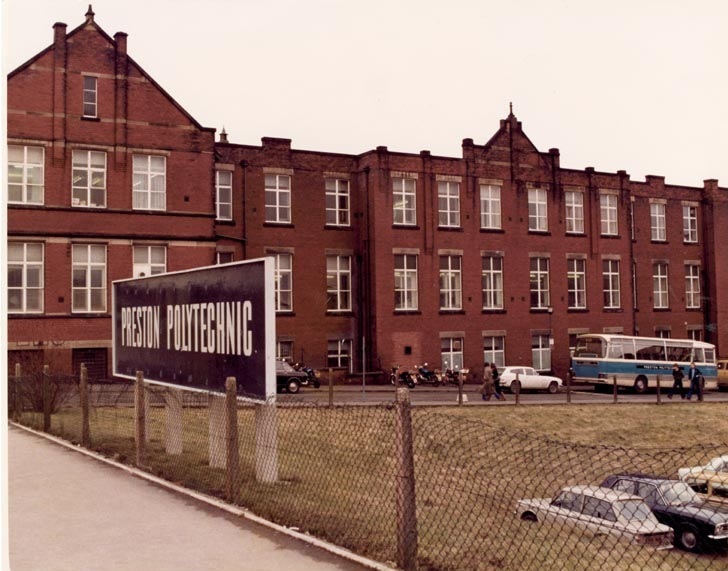
Ultimately, the DES offered that if Lancashire New Town was approved, it would support Harris College’s application. The New Town got the go-ahead in 1970, and Preston, just, had a polytechnic. Harris College officially became Preston Polytechnic in 1973. It may have been the last and the smallest of the polytechnics, but it was also perhaps the most ambitious of them all.
Keith Vernon, Historian in the School of Humanities and Social Sciences
